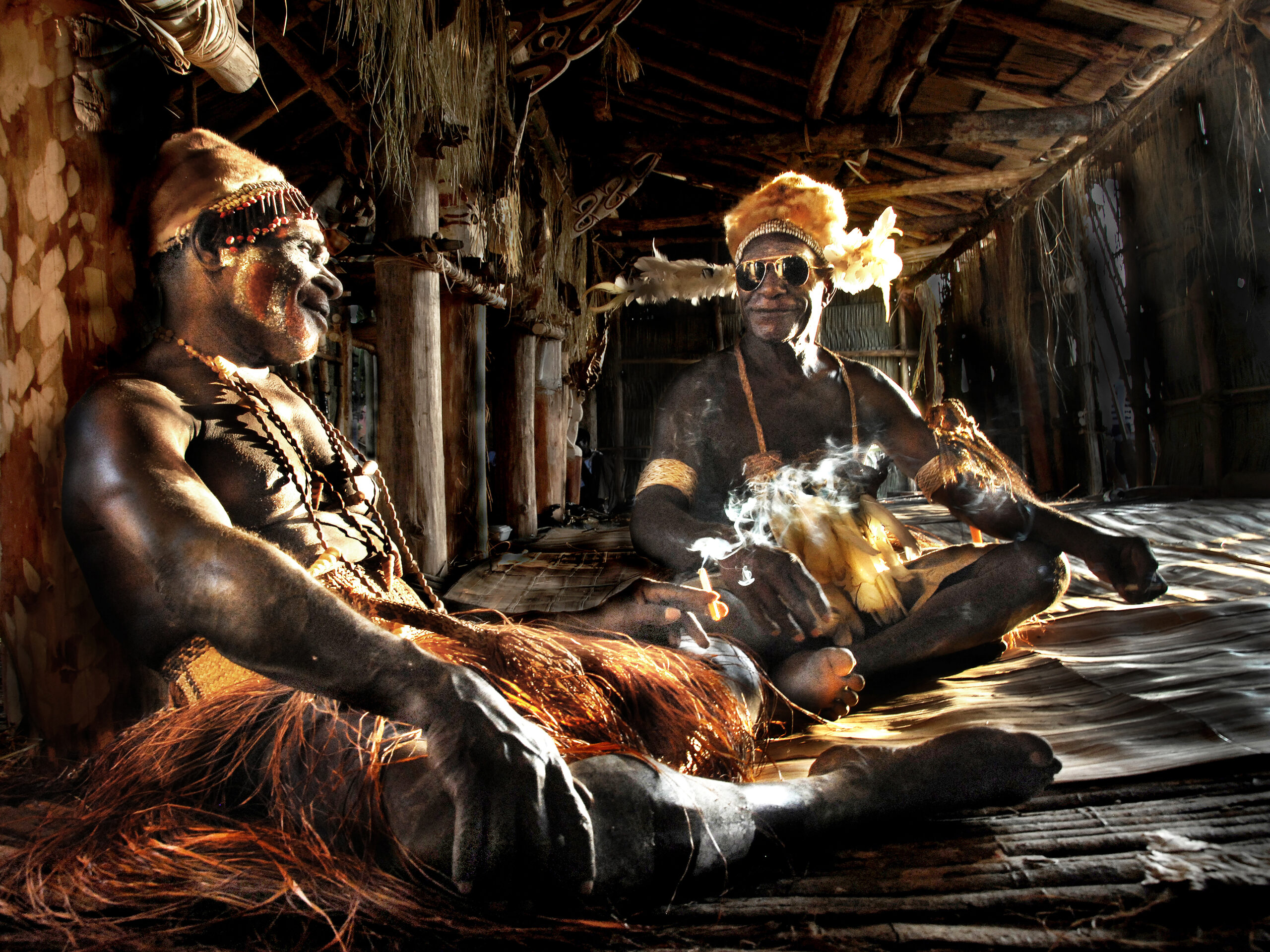
Before the Scriptures: The Ancient Covenant with Earth
Long before the first scripture was written, human beings were already in conversation with the sacred. They spoke to the creator in many names, through forests, mountains, rivers, and the language of drum and smoke. This was not the absence of faith. It was faith at its most elemental: direct, unmediated, and rooted entirely in the living world.
The World of Indigenous Voices
This ancient spiritual inheritance belongs to every continent. The Apache of the American Southwest conducted vision quests, solitary journeys into wilderness, fasting and praying until the spirit world answered. The Lakota Sioux of the Great Plains honoured Wakan Tanka; the Great Spirit. Their Seven Sacred Rites maintaining equilibrium between the people, the Creator, and all living beings. The Maori of New Zealand declared the river a living ancestor, a belief so deeply felt that in 2017 the government granted the Whanganui River legal personhood. The Sami of Arctic Scandinavia built an eight season calendar around the reindeer migration, their spiritual life inseparable from the land’s rhythms. The Yoruba of West Africa tended sacred groves inhabited by Orishas; nature spirits whose presence preserved biodiversity that no formal reserve could replicate. The Aboriginal Australians hold that the land does not belong to the people: the people belong to the land.
Indonesia: A Mosaic of Sacred Wisdom
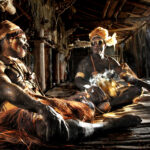
Nowhere is this ancient wisdom more vividly alive, and more richly diverse, than across the Indonesian archipelago. Indonesia is not a single spiritual tradition but a vast mosaic of indigenous voices. Each with its own cosmology, each rooted in the same essential understanding: that the natural world is sacred, and that human beings exist in covenant with it. The Dayak of Borneo believe that at death, the soul returns to the forest that sustained it in life. The Toraja of Sulawesi build their ancestors into cliffsides so the dead may continue watching over the valley of the living, the boundary between worlds deliberately kept thin.
The Javanese speak of the natural balance of the universe, the human community, and the living earth, tending it through ritual and ceremony as one tends a garden. The Balinese map existence into Sekala, the visible world, and Niskala, the unseen, two inseparable faces of one reality.
When Hindu and Buddhist ideas arrived through maritime trade from the Indian subcontinent. Written in stone, from Sanskrit inscriptions in East Kalimantan to the temples of Prambanan and Borobudur, these influences did not replace indigenous wisdom. They layered onto it, finding in Indonesia’s ancient soil a cosmology already fluent in the sacred. From this emerged a syncretic culture, where the relationship between humanity, the divine, and the earth is carefully balanced.
Long before any prophet walked the earth, people already knew that something sacred held the world together, and that their duty was to keep it in balance.
The Abrahamic Covenant: One God, Many Roads
From the ancient Middle East, a different grammar of the sacred emerged. The Abrahamic faiths; Judaism, Christianity, and Islam, trace their lineage to a single patriarch: Abraham, whose covenant with one God reshaped the religious map of the world. Where indigenous traditions spoke to the divine through nature, monotheistic faiths revealed it through prophecy and scripture, yet both seek a life of purpose. The Abrahamic traditions gave the world pilgrimage in its most structured form; the Hajj to Mecca, The Via Dolorosa to Jerusalem,the caminos of Christendom, roads that, like the Songlines and the Thudong path, were never merely geographical. They were maps of the interior.
The Thread That Connects Them All
The thread is unbroken. Whether in the stillness of Bali, the circling devotion of Mecca, or the quiet footsteps through Jerusalem, the oldest journeys share a single purpose: to bring us home to the world, and to ourselves. Ancient wisdom and modern faith share the same truth. How we treat the earth, each other, and ourselves is one question. They have always been one question. Every sacred road, in every tradition, has been an attempt to walk toward the answer.
CONTINUES TO CHAPTER 2:
THE LIVING PATHS
Image Cover Courtesy: Dedy H. Siswandi