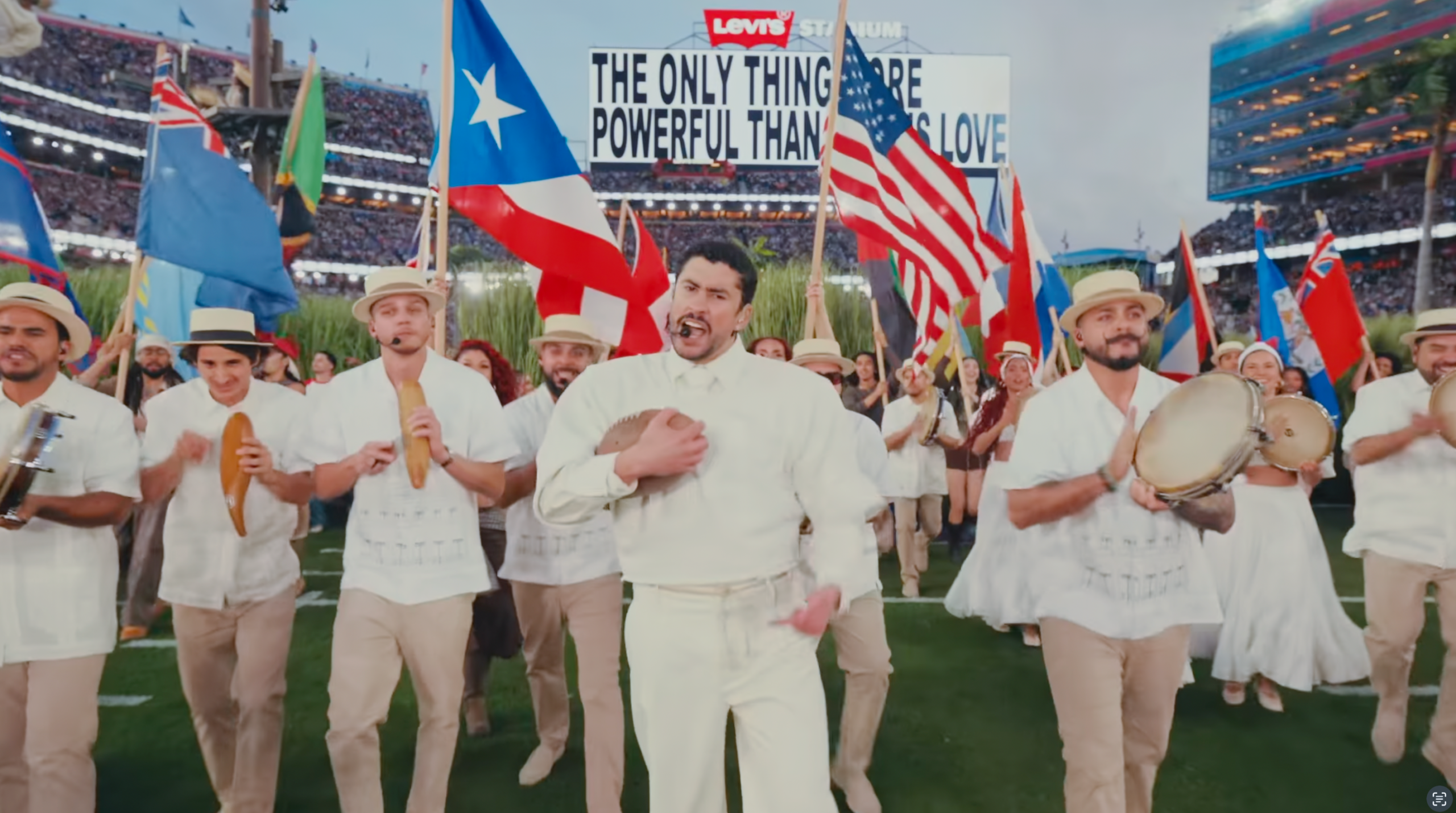
On February 8, 2026, at Levi’s Stadium in Santa Clara, California, Bad Bunny made history at Super Bowl 60 as the first artist ever to perform exclusively in Spanish during the halftime show. What unfolded was a profound celebration of Caribbean heritage woven into every carefully choreographed moment.
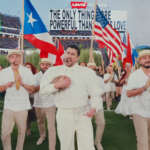
As the performance reached its crescendo, Bad Bunny named countries spanning the entire Americas and shouted “Seguimos aquí“; we’re still here, before spiking a football inscribed with “Together, We Are America.”
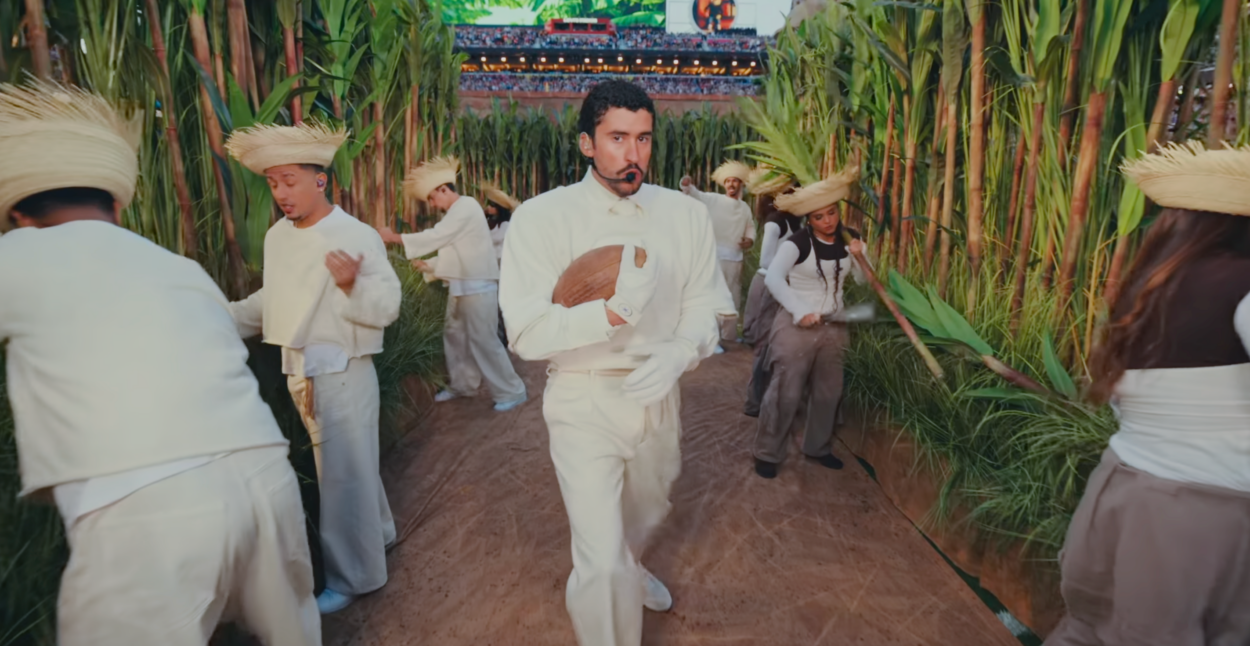
The Sugar Cane Fields: Reclaiming a Painful History
The halftime show opened with sweeping imagery of workers in sugar cane fields before Bad Bunny walked among harvesters performing “Tití Me Preguntó” This was deliberate historical reclamation. Sugar cane drove Caribbean economies for centuries while devastating local populations. Enslaved Africans worked Puerto Rico’s plantations until 1873, when slavery was abolished under Spanish rule. When the U.S. took control in 1898, American corporations seized Puerto Rican lands, extracting enormous profits from both labor and resources.
The dancers wore all white garments and traditional straw pava hats, the iconic attire of the jíbaro, the emblematic Puerto Rican countryman. Through these symbols, Bad Bunny honored the people who endured exploitation.
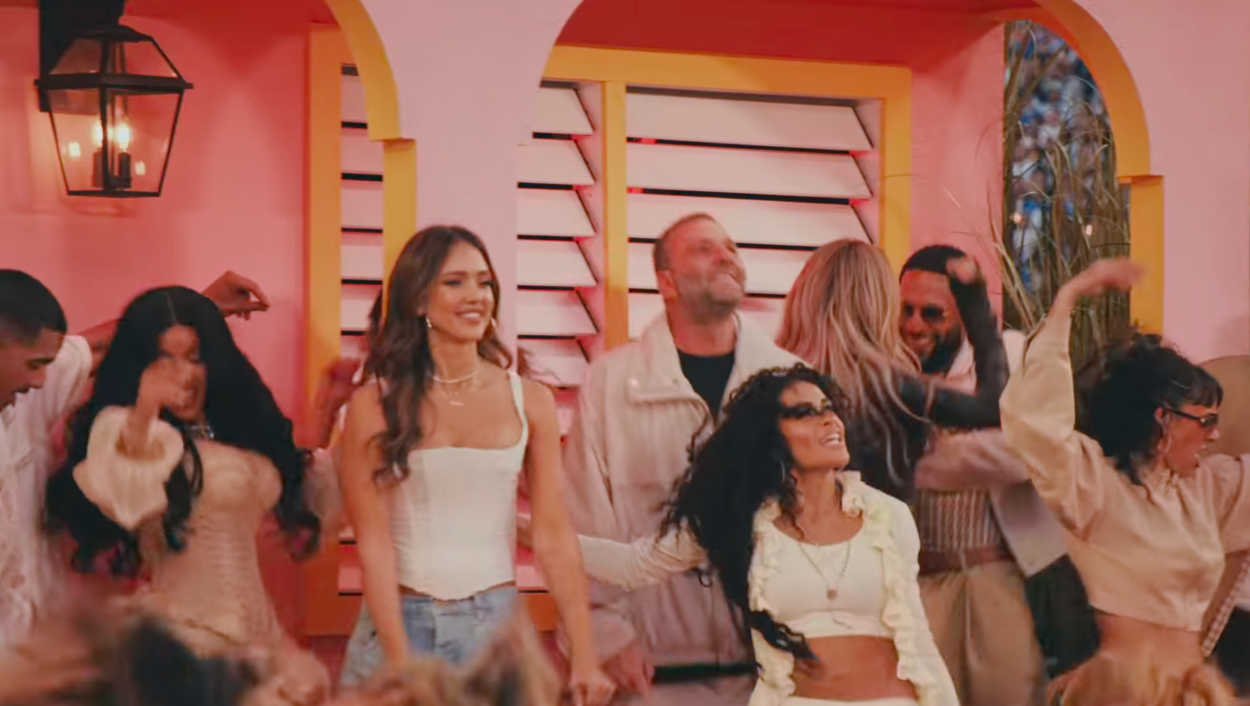
La Casita: A Beacon of Home and Belonging
Anchoring the entire performance was La Casita, a vibrant two-story stage set painted in signature shades of pink and yellow, modeled after traditional Puerto Rican homes. Originally designed as the centerpiece of Bad Bunny’s 2025 “No Me Quiero Ir De Aqui” residency, La Casita became the spiritual heart of the Super Bowl show, radiating warmth, nostalgia, and community pride.
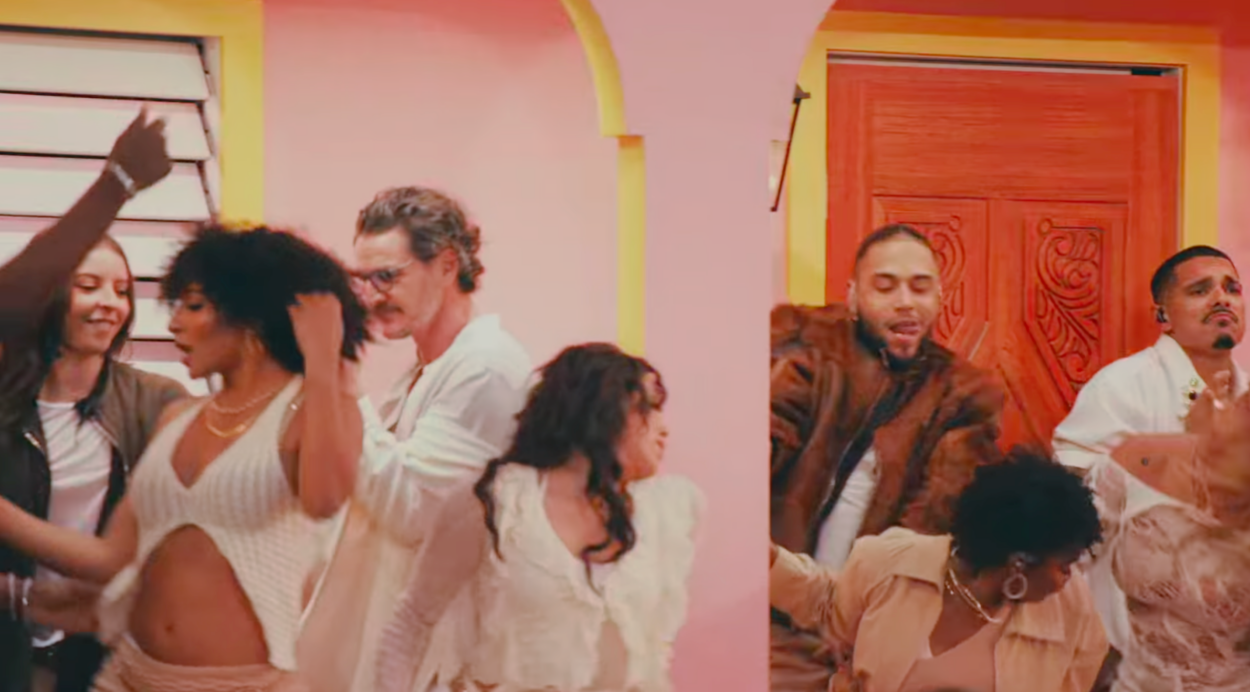
This intimate setting welcomed an extraordinary gathering of celebrity friends; Pedro Pascal, Cardi B, Jessica Alba, Karol G, and influencer Alix Earle, alongside entrepreneur Dave Grutman, who came not as spectators but as participants in a cultural homecoming.
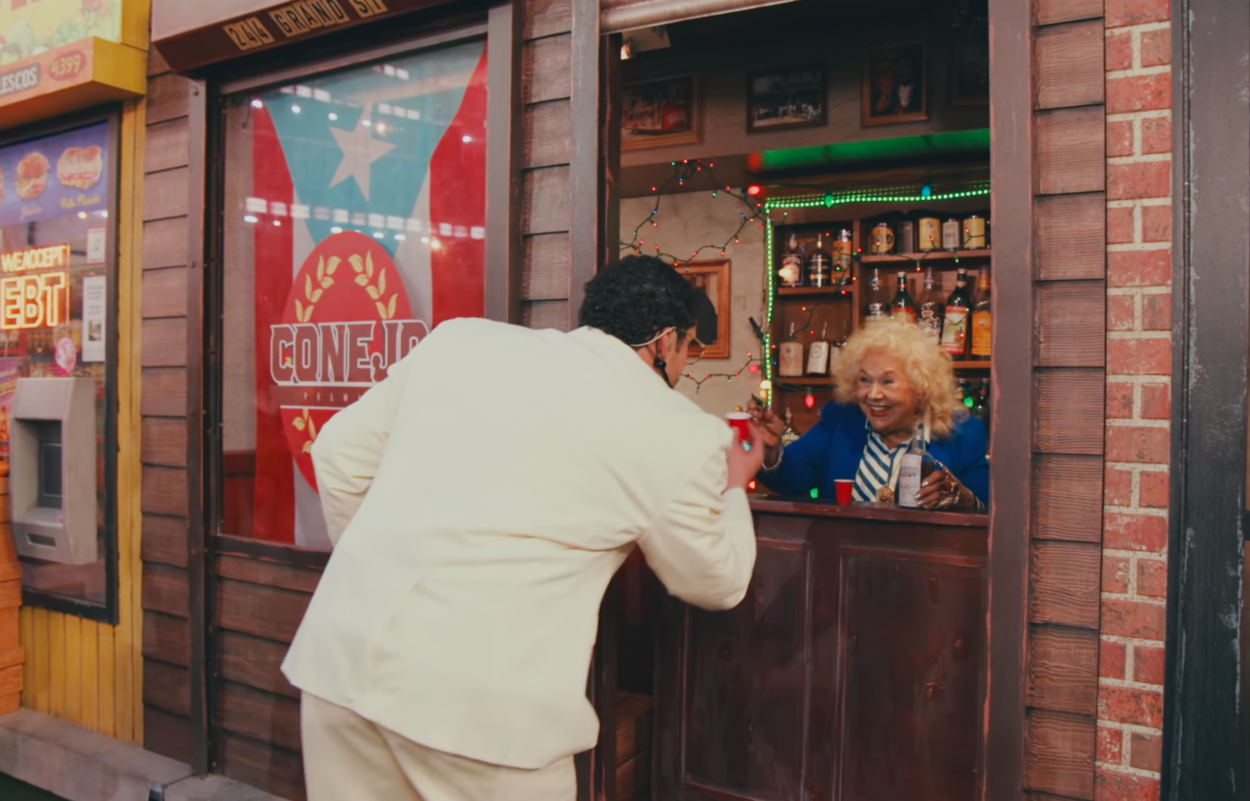
Toñita: The Bridge Between Island and Diaspora
During his performance of “Nuevayol” Bad Bunny accepted a shot from Maria Antonia “Toñita” Cay, a legendary figure in New York’s Puerto Rican community. For more than 50 years, Toñita has run the Caribbean Social Club in Williamsburg, Brooklyn, a sanctuary where island culture has thrived in the diaspora. Her presence on that stage was a tender acknowledgment that Puerto Rico lives not only on the island but in the hearts and gathering places of its scattered people worldwide.
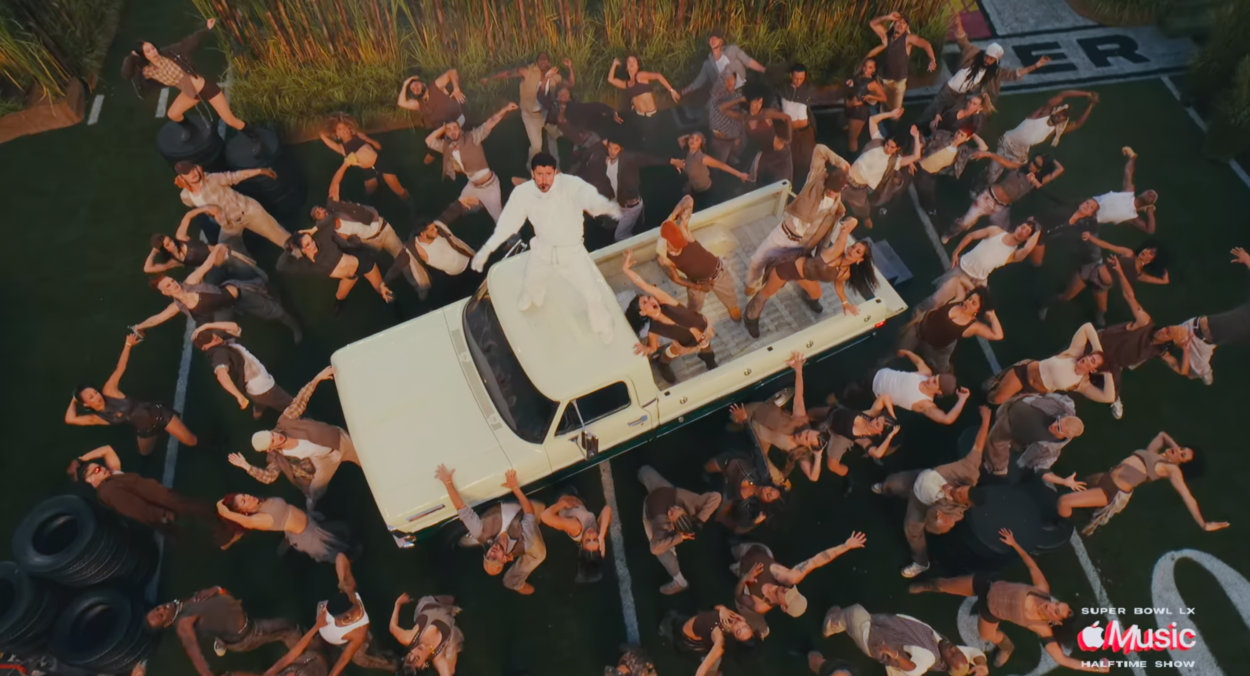
A Continental Embrace: The Flags of the Americas
As the show built toward its finale, Bad Bunny shouted “God bless América!” and proceeded to name nearly every nation from Chile in the south to Canada in the north. Moments later, a sea of flags, representing every country and territory in the Americas, surrounded him, creating a breathtaking tableau of continental unity.
This celebration echoed a powerful tradition among Latin musicians. Icons like Panama’s Rubén Blades, Puerto Rico’s Residente, and Mexico’s Los Tigres del Norte have long used their platforms to honor the shared heritage and interconnected struggles of the Americas. Bad Bunny joined their ranks, proving that music remains the most universal language of liberation.
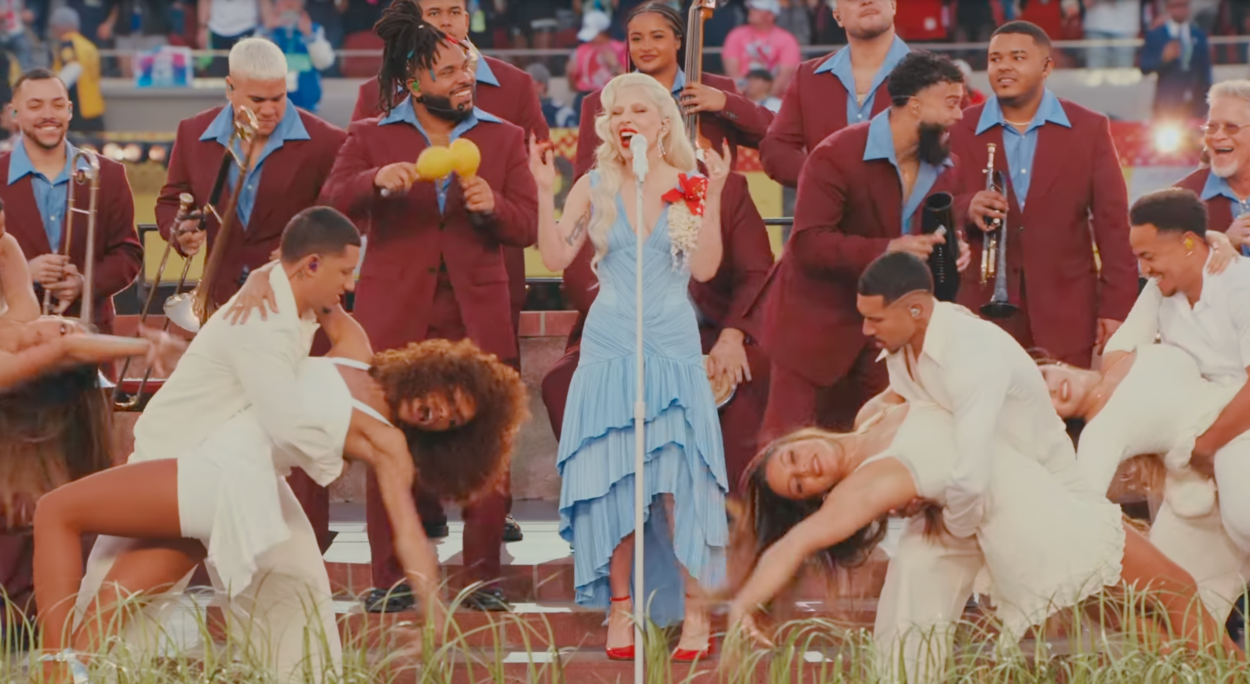
Lady Gaga’s Graceful Tribute
Pop superstar Lady Gaga made a surprise cameo, appearing in a baby blue dress adorned with a red floral brooch shaped like the maga, Puerto Rico’s national flower. It was an elegant gesture, a global icon honoring a nation’s identity through the language of fashion and flowers.
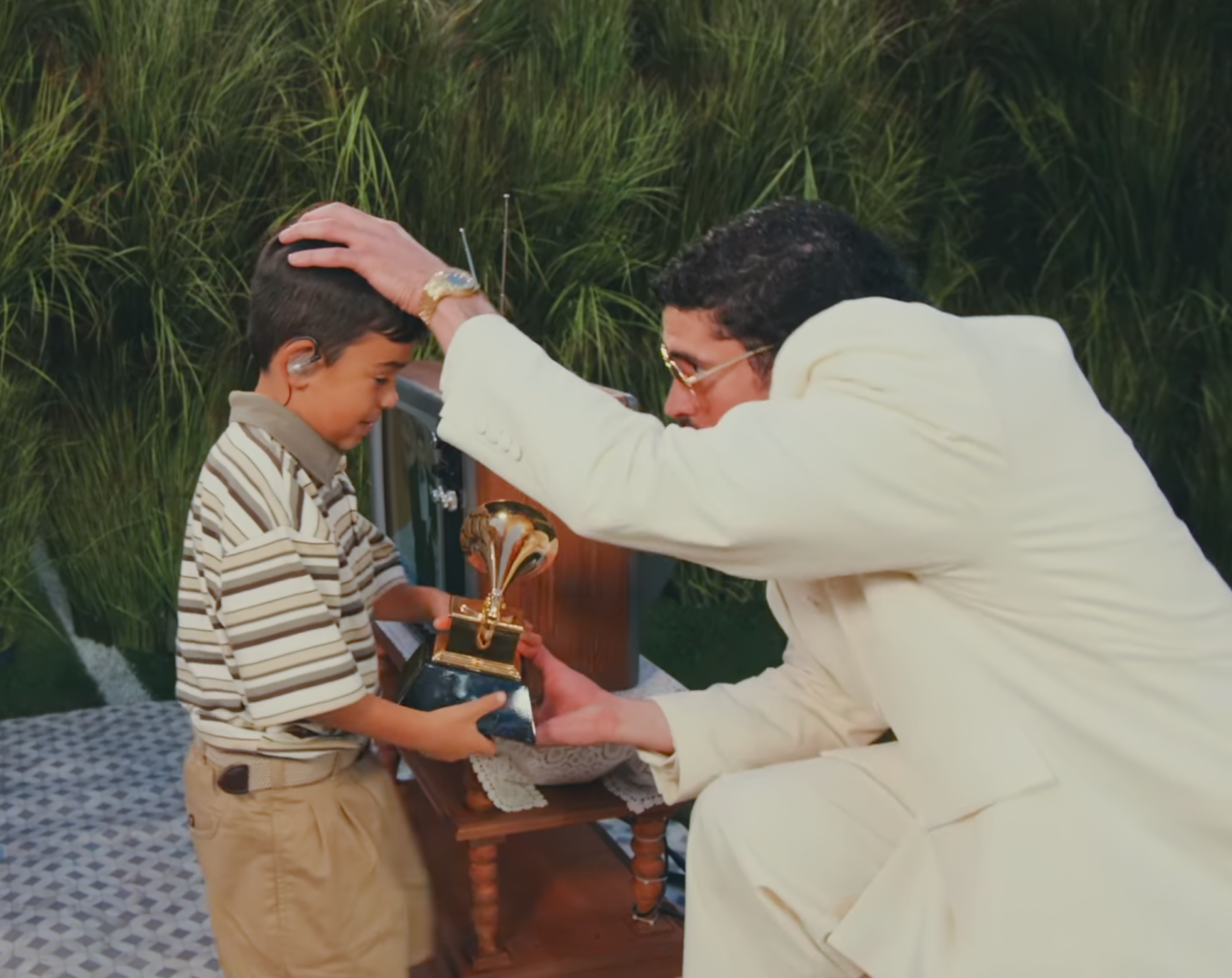
A Grammy Passed Forward
In perhaps the show’s most poignant moment, Bad Bunny handed his Grammy Award to Lincoln Fox, a five-year-old child actor, in a symbolic gesture representing his younger self. The tender exchange carried a universal message: that dreams belong to everyone, regardless of where they begin. It was a promise whispered across generations.
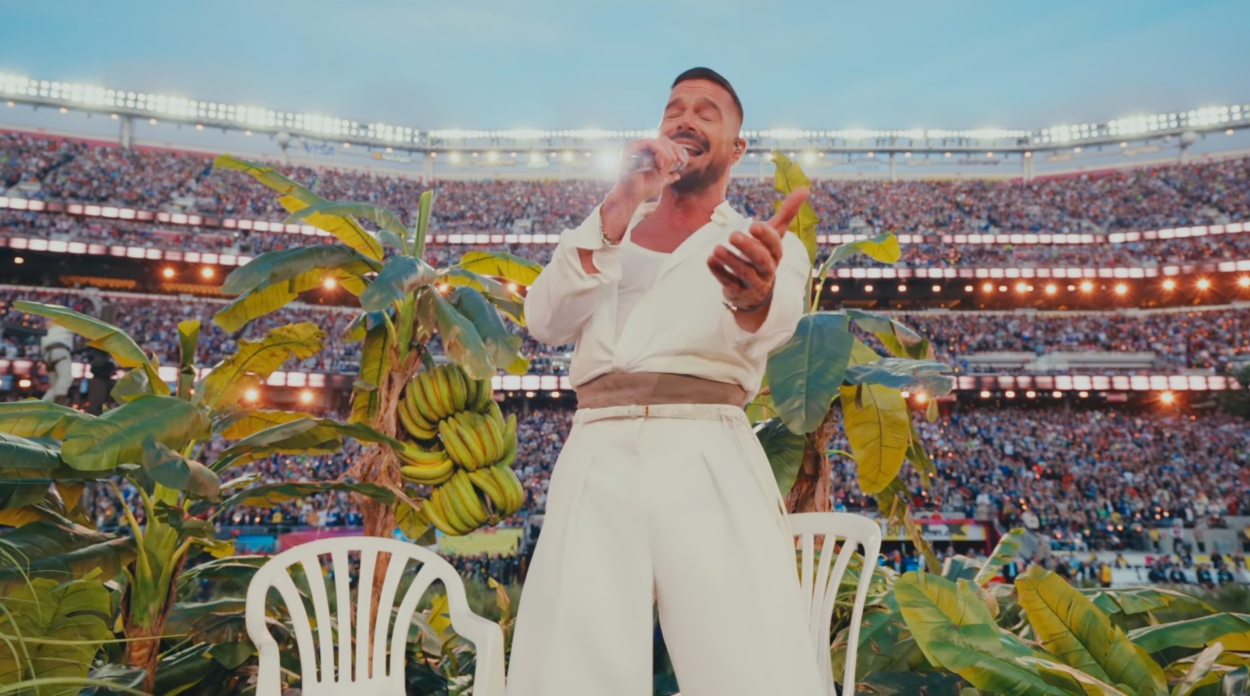
Ricky Martin and the Fight for Tomorrow
Puerto Rican legend Ricky Martin took the stage to perform Bad Bunny’s jíbaro ballad “Lo Que Le Pasó a Hawaii” (“What Happened to Hawaii”), a song that grapples with gentrification and the island’s contested future. Through this collaboration, the performance acknowledged contemporary struggles while honoring the voices fighting to preserve Puerto Rican identity and autonomy.
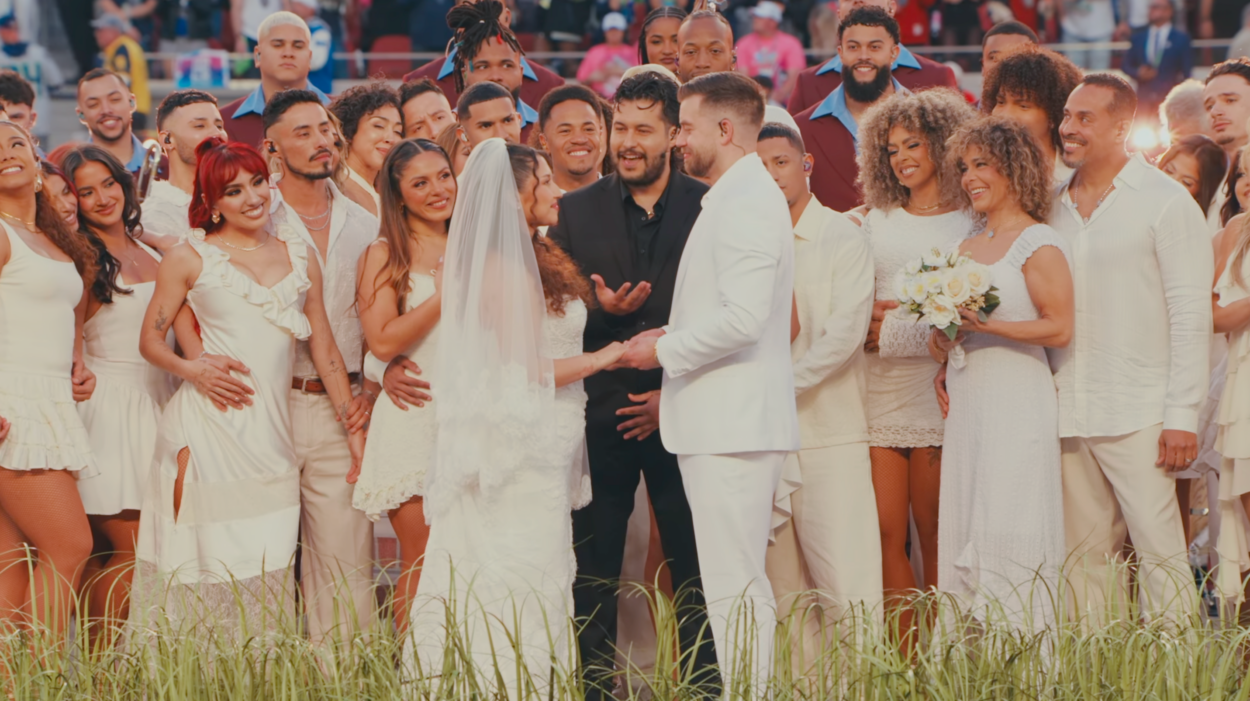
A Real Wedding, Center Stage
One of the halftime show’s most quietly moving moments arrived midway through the 13 minute performance, when a seemingly staged scene revealed itself as a real wedding unfolding live at Levi’s Stadium. A smiling officiant pronounced the couple married, before they stepped aside to reveal Lady Gaga and Los Sobrinos, a Puerto Rican salsa band, turning the ceremony into celebration.
Bad Bunny signed the marriage certificate as a witness, a real wedding cake followed, and the next day it was confirmed that the newlyweds; Thomas “Tommy” Wolter and Eleisa “Elli” Aparico, are a real life couple, making their Super Bowl vows a genuine, once in a lifetime moment shared with millions.
Image source: NFL and Apple Music YouTube broadcast