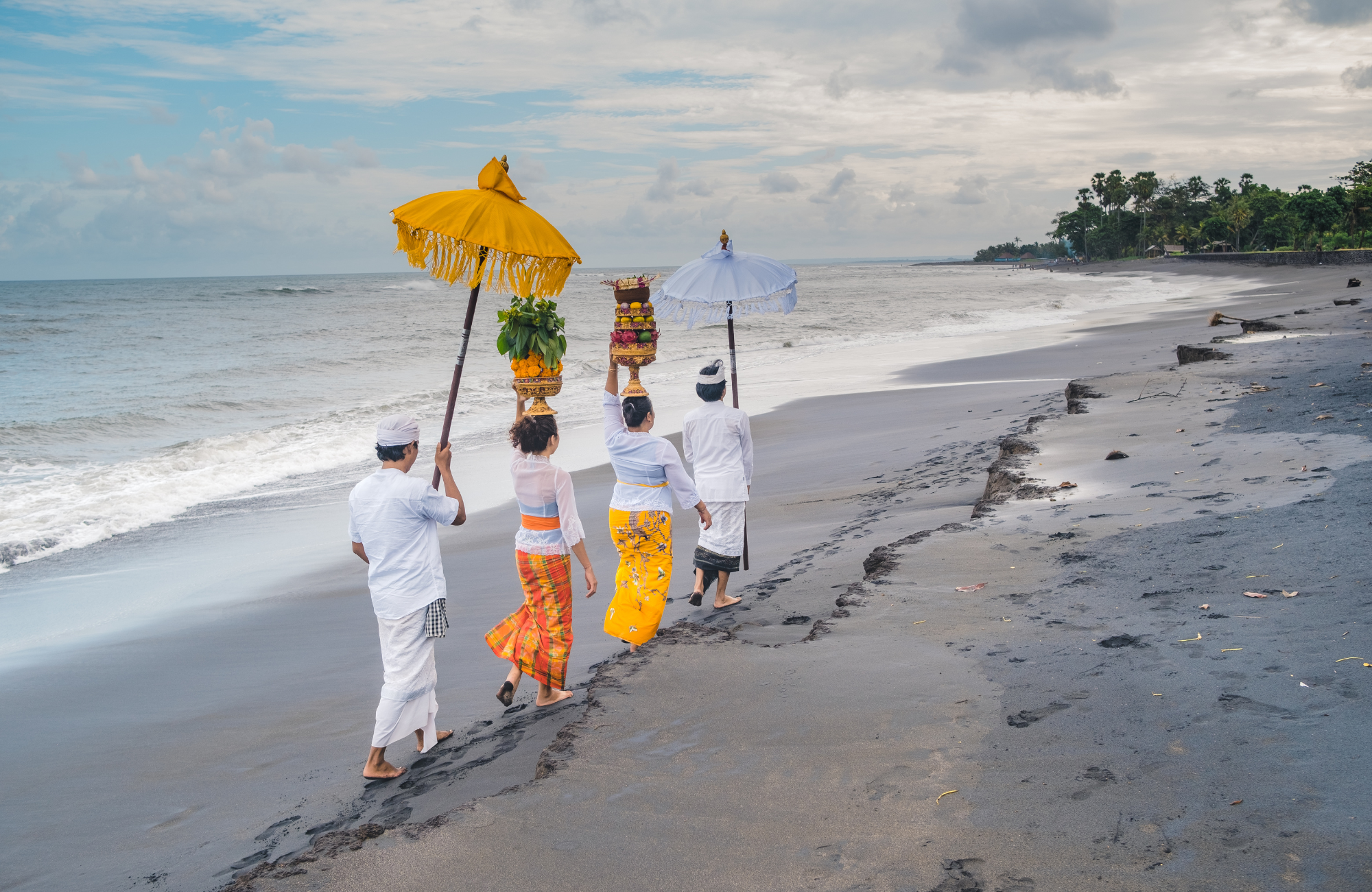
Nyepi: Sacred Silence as Planetary Prayer
Balinese New Year (Tahun Baru Saka) · Saka Lunar Calendar, Spring New Moon
Bali falls silent before dawn on Nyepi, the Balinese Saka New Year. No engines stir, no lights pierce the sky, the airport closes, the roads empty. For 24 hours, the island enacts Catur Brata Penyepian, the Four Sacred Restraints: no fire, no work, no travel, no indulgence.
The Balinese worldview holds that reality operates on two planes: Sekala (the visible world) and Niskala (the invisible, spiritual realm). Nyepi addresses both at once, purifying Buana Alit (the individual self) and Buana Agung (the cosmos and earth), restoring the three fold harmony of Tri Hita Karana: with God, with humanity, and with nature.
Amati Geni no fire or light — Every flame and screen extinguished. The island goes dark.
Amati Karya no work — All labour ceases. Farmer, merchant, craftsman, all rest.
Amati Lelungan no travel — Roads sealed. No movement through physical space.
Amati Lelanguan no indulgence — No music, feast, or entertainment — a fast for the senses.
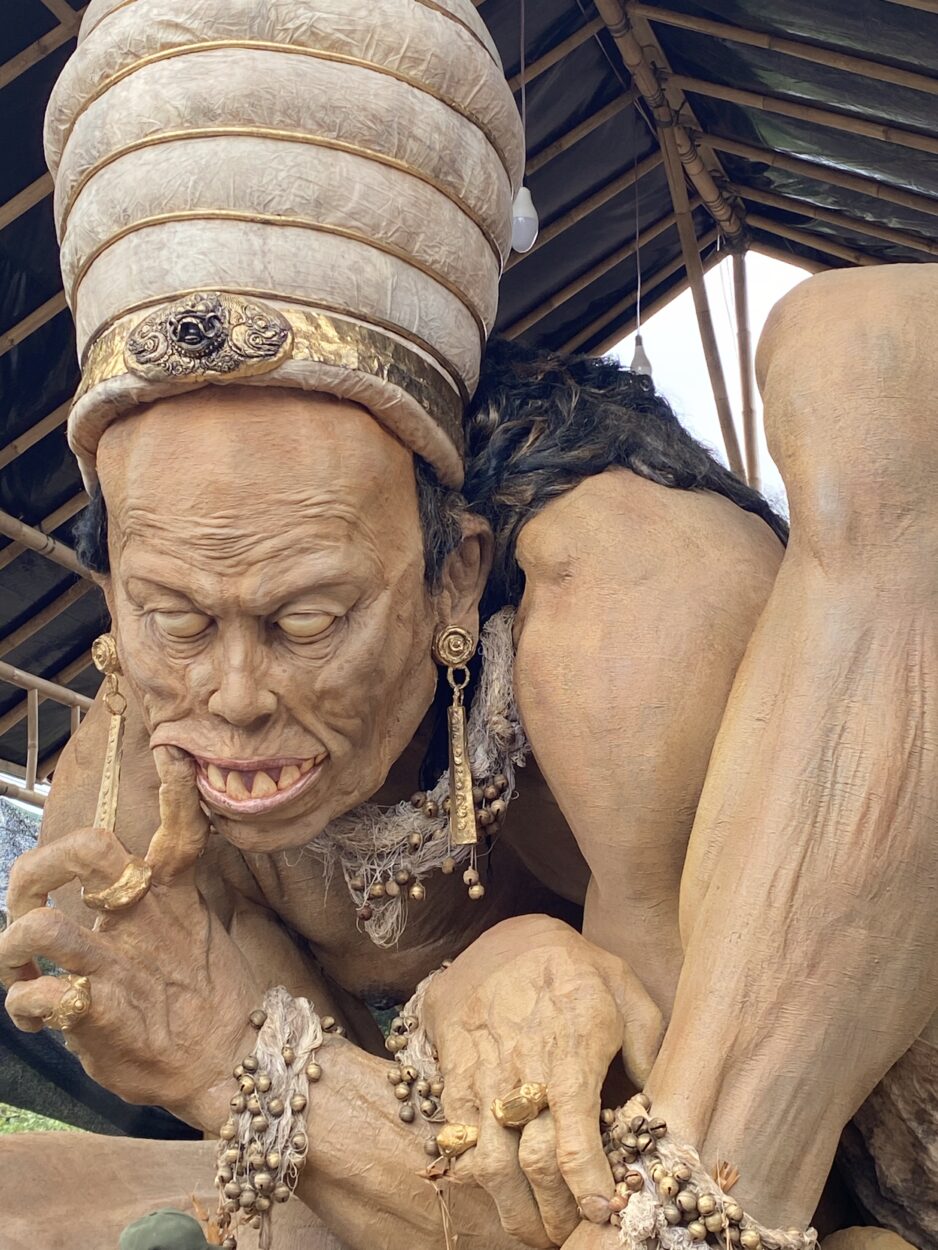
The night before, Pengerupukan, is Nyepi’s necessary antithesis. Giant papier-mâché effigies known as Ogoh-Ogoh; demonic figures paraded through torchlit streets and burned at the crossroads , cleanse malevolent forces from the community. Once paraded and symbolically released, the island grows still. Balinese Hindus believe this silence confuses malevolent forces, allowing harmony to be restored. More deeply, they believe that when humans withdraw, nature recalibrates. Silence becomes not emptiness, but alignment.
No other civilization on earth has written a sacred day of planetary rest into its calendar. In a world obsessed with movement, Bali teaches the radical act of stillness, not as policy, but as prayer.
What Nyepi achieves is, by any measure, extraordinary. For twenty four hours, one of the world’s most visited islands produces virtually zero carbon emissions. The night sky returns to pre-industrial luminosity. This is the Sekala gift of Nyepi to Buana Agung — a full breath given back to the earth.
Lent to Easter: Forty Days Toward the Light
Ash Wednesday through Easter Sunday · 40 days of penitence, pilgrimage, and renewal
For 40 days before Easter, the Christian world enters Lent. Fasting, penitence, and interior reckoning, a liturgical wilderness that mirrors the logic of Ramadan and Nyepi. The number 40 carries ancient weight: 40 days Jesus fasted in the desert, 40 years The Israelites in the wilderness. It is a deliberate emptying before the most radical claim in Christian theology: that death is not the end of the story. As Holy Week arrives, the pilgrimage roads come alive; Via Dolorosa in Jerusalem, Nazarenos walking barefoot through Seville, alfombras of coloured sawdust laid overnight in Antigua only to be walked over at dawn. These are not performances. They are the body doing what words alone cannot carry.
The pilgrim does not walk to escape the world. The pilgrim walks to enter it more fully , stone underfoot, ancient sun on the neck, the world’s grief alive in the bones.
Hajj and Eid al-Fitr: The Pilgrimage of Equality
Two million souls, dressed identically in white, circle a single black cube in Mecca. The Tawaf , the seven fold circumambulation of the Kaaba, dissolves every worldly marker: nationality, wealth, and rank vanish in the white cloth of ihram. Standing in supplication at Arafat, gathering pebbles at Muzdalifah by moonlight, walking the Sa’i in the footsteps of Hajar’s desperate search for water, every act is simultaneously physical and spiritual. Eid al-Fitr then arrives after thirty days of Ramadan’s fasting: the same logic as Nyepi and Lent, the same ancient covenant. Deny the senses to sharpen the spirit. The fast dissolves every wall between people. On Eid morning, for a few luminous hours, the world becomes one family.
Thudong: The Barefoot Road to Borobudur
Buddhist Vesak Pilgrimage · Bangkok to Borobudur ·
Ahead of Vesak in 2023 and 2025, monks walked from Bangkok to Borobudur Temple, carrying nothing but devotion and relying entirely on what the road provided. This is Thudong, from the Pali dhutanga, ascetic wandering that retraces the Buddha’s own pattern of moving village to village, spreading the Dhamma through presence alone. Upon arrival, monks ascend Borobudur’s terraces barefoot to perform pradakshina, three silent circumambulations of the main stupa, the same sacred circling as the Tawaf in Mecca, half a world away. Each step is not travel, it is practice. Each kilometre, a chapter of meditation made physical.
One Earth, Many Roads: The Living Covenant
Nyepi’s silence, Lent’s reckoning, Ramadan’s fast, the Thudong monks’ barefoot steps, all fall within the same turning of the earth. Different roads, different names, the same architecture: surrender precedes renewal, and every act of genuine reverence, however it is named, makes the world more whole. The old paths knew this before the first scripture was written. They are still teaching it now.
FIELD NOTES FOR THE SACRED TRAVELLER
Nyepi, Bali, Indonesia: 19 March 2026. Date is change every year. Guests confined to accommodation for 24 hours. Pre-Nyepi Ogoh-Ogoh parade and Melasti sea processions unmissable. Book eco-resorts in Ubud or Sidemen.
Via Dolorosa & Holy Week, Jerusalem: Good Friday procession, Old City. No ticket required. Semana Santa in Seville and Antigua, Guatemala runs Palm Sunday through Easter Sunday.
Semana Santa, Antigua, Guatemala: UNESCO-listed celebration. Alfombra sawdust carpets constructed overnight; elaborate processions throughout Holy Week.
Camino de Santiago, Spain: 800 km to Santiago de Compostela. Open year-round; pilgrims often time arrival for Easter.
Thudong / Vesak at Borobudur, Indonesia: Monks walk Bangkok to Borobudur (~2,600 km) annually, arriving for Vesak in May. Borobudur Temple, Central Java. UNESCO World Heritage Site.
Hajj & Eid al-Fitr, Mecca, Saudi Arabia: 21 March 2026. Dhul Hijjah (Islamic lunar calendar). Eid al-Fitr follows Ramadan. Obligatory once for able Muslims. Non-Muslims: read Ibn Battuta or Malcolm X’s Letter from Mecca.